
Keynote Speakers
Prof. Vasilis Katos
University of Applied Sciences and Arts of Southern Switzerland (CH)
Department of Innovative Technologies
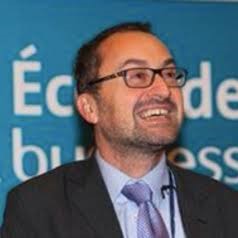
Threat Landscaping in the AI Gold Rush Era: Capability, Hype, and the Human Layer
The rush to apply AI in cybersecurity, both commercial and scholarly, has been underway for the last few years, with vendors and researchers alike racing to field agentic defences for security operations. Successive frontier models have marked how rapidly offensive capability is advancing alongside it. A recent milestone came in April 2026, when the UK AI Security Institute reported that Anthropic’s Claude Mythos Preview could autonomously execute multi-stage network attacks and discover and exploit vulnerabilities unaided, tasks that would otherwise take human professionals days. Yet much of the defensive response outpaces the evidence: the same evaluations were run against weakly defended systems with no active defenders, leaving the core defensive question unresolved. This keynote asks where the cyber research community should focus amid the apparent hype. It reviews the tools, frameworks, and research directions most likely to yield durable progress. Among these tools and directions, the talk introduces the Human Layer Kill Chain, which extends the Cyber Kill Chain to the human dimension and fuses with it to form a Sociotechnical Kill Plane spanning technical and human indicators of compromise.
Biography
Vasilis Katos is Professor in Cyber Security at Bournemouth University. He holds a Diploma in Electrical Engineering from Democritus University of Thrace, an MBA from Keele University, and a PhD in Computer Science, focused on network security and cryptography, from Aston University. He is also a Certified Hacking Forensic Investigator (CHFI).
His research focuses on digital forensics, incident response, cyber security, and the human and sociotechnical dimensions of cyber threats. He has worked as an information security consultant and has served as an expert witness in information security in the UK and Greece. His work includes collaborations with organisations such as the EU Intellectual Property Office and UNICRI, and he has participated in EU and nationally funded research projects as well as national and international cyberdefence exercises.
Professor Katos has authored more than 160 publications across journals, books, book chapters, and conference proceedings, and serves on the editorial board of Computers & Security.
Dr. Ryan Hearfield
Royal Holloway University of London (UK)
Department of Information Security

Sustainable Cybersecurity in the Era of Hyperconnected Agentic AI and Cyber-Physical Systems
Two decades of continuous digital transformation have fundamentally shifted how technology is deployed and secured across modern society. Throughout this evolution, AI-powered cybersecurity has emerged as a cornerstone of sustainable defence, maturing rapidly in efficacy and enterprise adoption. Today, the rise of Agentic AI, and its deployment across offensive and defensive operations, converges with the future proliferation of hyperconnected, AI-embodied cyber-physical systems. This intersection demands scalable, machine-speed, and resilient AI-driven security, alongside robust frameworks for securing AI itself.
This keynote explores AI innovations for cybersecurity across modern networks, human sensors, and cyber-physical domains. We examine recent advancements in reinforcement learning for autonomous incident response and analyse the integration of Agentic AI into end-to-end security operations, highlighting critical gaps between industry capabilities and academic research. Finally, we share novel insights from the seminal Offensive AI Agent Workshop hosted by Palo Alto Networks in February 2026, which convened global experts from frontier AI laboratories, leading academic research and government cybersecurity institutions. By synthesising these perspectives, this address aims to illuminate promising future research pathways to secure the growing ubiquity between Agentic AI and cyber-physical systems.
Biography
Konstantinos Markantonakis B.Sc. M.Sc., MBA, Ph.D., received his BSc in Computer Science from Lancaster University, his MSc in Information Security, his PhD and his MBA in International Management from Royal Holloway, University of London. He is currently a Professor of Information Security in the Information Security Department in Royal Holloway University of London. He is also the Director of the Information Security Group Smart Card and IoT Security Centre (SCC) and the Director of the Transformative Digital Technologies, Security and Society Catalyst. His main research interests include smart card and mobile device security and applications, IoT, embedded system security, distributed ledger and smart contracts, trusted execution environments, payment systems, automotive and avionics system security. He has published more than 220 papers in international conferences and journals. He has served as invited speaker, chair, steering and program committee member, and editor for several international conferences and journals. His research has attracted funding from competitive UK/EU funding sources but also from the industry, and he has led into completion several funded projects. He is a co-inventor in two patent applications and has successfully commercialised a project idea with a couple more in the pipeline. He has received a few awards including the International Federation for Information Processing (IFIP) Service Award, and also best paper awards. He is the chair of IFIP WG 11.2 Pervasive Systems Security. He has experience in commercialisation of cyber security ideas and products, and he has acted as experienced consultant for several key technology companies.
Prof. Constantinos Patsakis
University of Piraeus (GR)
Department of Informatics

Adversarial bypasses on detection engines, from code to binaries
The continuous arms race between threat actors and defenders has significantly raised the bar for both sides, resulting in highly sophisticated measures from both sides. This talk will look at the problem from the perspective of the adversary and discuss methods to bypass static analysis of both code and binaries. While not as thorough as dynamic analysis, static methods, due to their efficiency and low requirements for resources, are the first line of defence. Therefore, breaching them implies that the adversary can establish a foothold in the targeted organisation. To this end, we will discuss insider threats, i.e., how one could masquerade vulnerable code to bypass state of the art SAST pipelines, but also bypasses to AI-based methods to detect malware. These attacks try to shed light on the balance that defenders need to strike between strict rules and automated AI methods, but also the need to dive deep into the data and understand the complexities and interdependencies.
Biography
Constantinos Patsakis is a professor at the Department of Informatics, University of Piraeus and an adjunct researcher at the Institute for the Management of Information Systems (IMIS) of Athena Research and Innovation Centre. He holds a BSc in Mathematics from the University of Athens, Greece, and an M.Sc. in Information Security from Royal Holloway, University of London. He obtained a PhD in Security from the Department of Informatics of the University of Piraeus. His main areas of research include cryptography, security, privacy and cybercrime. In the past, he has worked as a researcher at the UNESCO Chair in Data Privacy at the Rovira i Virgili University of Tarragona, Catalonia, Spain, Trinity College, Dublin, Ireland, and the Luxembourg Institute of Science and Technology.
Detailed Program
Monday, 04 Aug. 2025 |
|
| 12:00–12:40 | Session KNT1: IEEE CSR keynote speakers Chair: Stavros Shiaeles, University of Portsmouth (UK) Room: Main Hall |
| 12:00–12:40 | Unifying security: How trusted execution environments secure AI on the edge and the battle against side-channel attacks K. Markantonakis |
Tuesday, 05 Aug. 2025 |
|
| 12:00–12:40 | Session KNT2: IEEE CSR keynote speakers Chair: Emanuele Bellini, University of Roma Tre (IT) Room: Main Hall |
| 12:00–12:40 | Digital twins for trustworthy autonomy F. Flammini |
Wednesday, 06 Aug. 2025 |
|
| 12:00–12:40 | Session KNT3: IEEE CSR keynote speakers Chair: Nicholas Kolokotronis, University of the Peloponnese (GR) Room: Main Hall |
| 12:00–12:40 | Adversarial bypasses on detection engines, from code to binaries C. Patsakis |