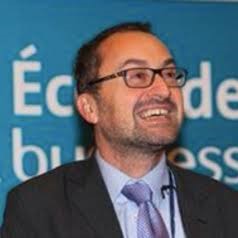
Prof. Vasilis Katos
Professor in Cyber Security
Bournemouth University (UK)

Professor in Cyber Security
Bournemouth University (UK)
The rush to apply AI in cybersecurity, both commercial and scholarly, has been underway for the last few years, with vendors and researchers alike racing to field agentic defences for security operations. Successive frontier models have marked how rapidly offensive capability is advancing alongside it. A recent milestone came in April 2026, when the UK AI Security Institute reported that Anthropic’s Claude Mythos Preview could autonomously execute multi-stage network attacks and discover and exploit vulnerabilities unaided, tasks that would otherwise take human professionals days. Yet much of the defensive response outpaces the evidence: the same evaluations were run against weakly defended systems with no active defenders, leaving the core defensive question unresolved. This keynote asks where the cyber research community should focus amid the apparent hype. It reviews the tools, frameworks, and research directions most likely to yield durable progress. Among these tools and directions, the talk introduces the Human Layer Kill Chain, which extends the Cyber Kill Chain to the human dimension and fuses with it to form a Sociotechnical Kill Plane spanning technical and human indicators of compromise.
Vasilis Katos is Professor in Cyber Security at Bournemouth University. He holds a Diploma in Electrical Engineering from Democritus University of Thrace, an MBA from Keele University, and a PhD in Computer Science, focused on network security and cryptography, from Aston University. He is also a Certified Hacking Forensic Investigator (CHFI).
His research focuses on digital forensics, incident response, cyber security, and the human and sociotechnical dimensions of cyber threats. He has worked as an information security consultant and has served as an expert witness in information security in the UK and Greece. His work includes collaborations with organisations such as the EU Intellectual Property Office and UNICRI, and he has participated in EU and nationally funded research projects as well as national and international cyberdefence exercises.
Professor Katos has authored more than 160 publications across journals, books, book chapters, and conference proceedings, and serves on the editorial board of Computers & Security.
Solution Consultant
Palo Alto Networks (UK)
Two decades of continuous digital transformation have fundamentally shifted how technology is deployed and secured across modern society. Throughout this evolution, AI-powered cybersecurity has emerged as a cornerstone of sustainable defence, maturing rapidly in efficacy and enterprise adoption. Today, the rise of Agentic AI, and its deployment across offensive and defensive operations, converges with the future proliferation of hyperconnected, AI-embodied cyber-physical systems. This intersection demands scalable, machine-speed, and resilient AI-driven security, alongside robust frameworks for securing AI itself.
This keynote explores AI innovations for cybersecurity across modern networks, human sensors, and cyber-physical domains. We examine recent advancements in reinforcement learning for autonomous incident response and analyse the integration of Agentic AI into end-to-end security operations, highlighting critical gaps between industry capabilities and academic research. Finally, we share novel insights from the seminal Offensive AI Agent Workshop hosted by Palo Alto Networks in February 2026, which convened global experts from frontier AI laboratories, leading academic research and government cybersecurity institutions. By synthesising these perspectives, this address aims to illuminate promising future research pathways to secure the growing ubiquity between Agentic AI and cyber-physical systems.
Ryan Heartfield is a cybersecurity researcher whose work focuses on AI-driven security, cyber threat modelling, telecommunications security, and cyber-physical systems. His research includes the use of adversarial tactics, techniques, and procedures for dynamic threat modelling, including work on extending MITRE ATT&CK-based approaches for 5G core networks.
His recent work explores the growing role of agentic AI in both offensive and defensive cybersecurity operations, with particular attention to autonomous incident response, AI-enabled security operations, and the security challenges introduced by hyperconnected cyber-physical systems.
At IEEE CSR 2026, his keynote addresses sustainable cybersecurity in the era of hyperconnected agentic AI and cyber-physical systems, highlighting emerging research gaps and future directions for resilient AI-driven security.
Professor in Cybersecurity and Communication Networks
University of Wolverhampton (UK)
This keynote will explore how communication networks, AI and cybersecurity can enable the next generation of Cyber-Physical Vehicular Health Monitoring Systems, moving towards the long-term vision of a trusted Vehicular National Health Service. The talk will introduce how vehicles can be continuously monitored for both physical health—such as engine, battery, sensor and component faults—and cyber health, including attacks on communication, control and data systems.
The presentation will discuss the role of stakeholders such as vehicle owners, manufacturers, garages, MOT centres, insurers, fleet operators, regulators, cybersecurity experts and researchers in building a secure vehicle health ecosystem. It will highlight the importance of communication protocols, digital twins and secure data exchange for real-time monitoring, predictive diagnostics and cyber-resilience.
A key focus will be on cybersecurity in 5G/6G vehicular networks, including rogue base station detection, V2X-oriented threat taxonomy, and the development of a Zero Trust Rule-Based Protocol for Secure 5G Handover Against Rogue Base Stations. The talk will explain how such approaches can reduce risks from spoofing, jamming, malicious handover and network manipulation.
The keynote will also present the role of machine learning and deep learning in vehicle engine health monitoring, supporting early fault detection, anomaly classification and predictive maintenance. In addition, it will introduce the CyberVehiCare Test-bed as an experimental platform for validating AI, cybersecurity and communication solutions for connected vehicles.
Finally, the talk will discuss AI-enabled microservices for different stakeholders and introduce the CyberVehiCare Research Consortium as a collaborative platform for advancing research in vehicular cybersecurity, intelligent transportation, cyber-physical systems and connected mobility.
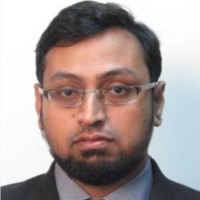
An internationally recognised and award-winning Cybersecurity and Communication Networks Specialist, Dr. Md Arafatur Rahman is a highly accomplished academic leader with over 15 years of impactful experience in research, teaching, and innovation across Computer Science, Cybersecurity, and Communications Engineering. Currently a Professor in Cybersecurity and Communication Networks at the University of Wolverhampton, UK, he has held esteemed academic and research positions, including Associate Professor at Universiti Malaysia Pahang, Postdoctoral Fellow at the University of Naples Federico II, and Visiting Researcher at Sapienza University of Rome.
Dr. Rahman’s core research areas include Cybersecurity, Internet of Things (IoT), 5G/6G, Vehicular Communication, Cyber-Physical Systems, Edge/Fog/Cloud Computing, and AI-driven applications. He has led and contributed to high-impact research and development projects globally.
He is the Director of CyberVehiCare, a global research consortium advancing vehicular cybersecurity and AI-integrated communications, involving over 20 national and international academic collaborators. He is also a leading advisor of Research Innovation Technology Solution (RITECHS) Ltd, a UK-based innovation platform supporting over 100 PhD-level mentors and hundreds of mentees—mainly Master’s and PhD students worldwide—in ICT research.
Dr. Rahman has successfully supervised 4 PhD and 6 MPhil students and is currently supervising TEN more PhD students, while also serving as an academic advisor for major ERDF projects like SOLVD and Cyber Quarter, which involved five postdoctoral researchers and serving more than 50 SMEs in UK.
With over 50 prestigious international research awards, his accolades include:
• Community Reassurance Award for Cyber Awareness (UK, 2024)
• Best Survey Paper Award (Elsevier, Vehicular Communications, 2024)
• Best Conference Paper Awards at global events
• Innovation awards from Germany, Poland, Malaysia, and the UK, including iENA, BiS, and MTE
He has published around 200 peer-reviewed articles in high-impact journals and conferences, such as IEEE TII, IEEE TITS, IEEE TSC, Elsevier FGCS, IEEE CSR, IEEE INFOCOM, IEEE Globecom, IEEE EMBS, IEEE 5GWF, and IEEE DASC. His scholarly achievements have been recognised with inclusion in Stanford University’s World Top 2% Scientists List (2019–2024), including the Whole Career Impact Category in 2024, supported by around 5,000 citations and an h-index of 35.
Dr. Rahman’s impactful research has led to the successful commercialization of several innovative products, including a 5G Router launched by KUMA Ltd in the UK, the TV Rhyme television rating system, and a Smart Lighting System released to the market by PT FUSI in Indonesia. Currently, he is also leading impact-focused research on CyberMoT, Cyber4ME, Cyber4SMEs, and CyberVehiCare, which merge cutting-edge AI, cybersecurity, and communication technologies for societal and commercial benefit.
Dr. Rahman also contributes extensively to the research community through his roles as:
• Specialty Chief Editor, Frontiers in IoT
• Associate Editor, IEEE ACCESS
• Editorial Board Member, Computers (MDPI) and Tech Science Press
• General Chair and Founder of Scopus-indexed conferences ETCCE, ICETCS, and ITSS-IoE
• Guest Editor of IEEE and Elsevier special issues
• Keynote Speaker at national and international forums
He is a Senior Member of IEEE, a Fellow of the Higher Education Academy (HEA) in the UK and has been endorsed by the Royal Academy of Engineering as a Global Talent under the “Exceptional Talent” category. He previously held fellowships at the IBM Centre of Excellence and the Earth Resources & Sustainability Centre (Malaysia).
Dr. Rahman’s work is marked by his rare blend of technical depth, strategic leadership, and global engagement, making him a pivotal figure in shaping the future of cybersecurity and advanced communications research worldwide.
Monday, 03 Aug. 2026 |
|
| 12:00–12:40 | Session KNT1: IEEE CSR keynote speakers Chair: Alexios Lekidis, University of Thessaly (GR) Room: Main Hall |
| 12:00–12:40 | Threat Landscaping in the AI Gold Rush Era: Capability, Hype, and the Human Layer V. Katos |
Tuesday, 05 Aug. 2026 |
|
| 12:00–12:40 | Session KNT2: IEEE CSR keynote speakers Chair: Nicholas Kolokotronis, University of the Peloponnese (GR) Room: Main Hall |
| 12:00–12:40 | Sustainable Cybersecurity in the Era of Hyperconnected Agentic AI and Cyber-Physical Systems R. Heartfield |
Wednesday, 06 Aug. 2026 |
|
| 12:00–12:40 | Session KNT3: IEEE CSR keynote speakers Chair: Stavros Shiaeles, University of Portsmouth (UK) Room: Main Hall |
| 12:00–12:40 | From Connectivity to Cyber Resilience: Communication, AI and Cybersecurity for Cyber-Physical Vehicular Health Monitoring Systems A. Rahman |